
George Lucas
Creator of Star Wars and Indiana Jones franchises
Quick Facts & Wiki Profile
| Full Name | George Lucas |
| Net Worth | $5.5 Billion |
| Annual Earnings | $200 Million/yr |
| Profession | Creator of Star Wars and Indiana Jones franchises |
| Age & Birthday | 81 Years (Born May 14, 1944) |
| Country of Origin | United States 🇺🇸 |
| Source of Wealth | Lucasfilm sale to Disney and media franchise equity |
| Spouse / Partner | N/A |
| Social Media Reach | 5M+ Followers |
Entity Hub & Related Deep Dives
Explore more stories and analytical coverage on George Lucas:
Biography & Deep Dive
Early Life & Background
George Walton Lucas Jr. was born on May 14, 1944, in Modesto, California, where his father owned a stationery store and walnut ranch. Growing up during the 1950s, Lucas developed a profound fascination with fast cars, comic books, and science fiction serials like Flash Gordon. Initially, his greatest ambition was to become a professional race car driver, competing in local underground dirt track races throughout his youth. However, just days before his high school graduation, he suffered a near-fatal car crash that shattered his car and severely injured his lungs, forcing him to reconsider his future and pursue higher education. Following his recovery, Lucas enrolled at Modesto Junior College before transferring to the prestigious University of Southern California (USC) School of Cinematic Arts. At USC, he immersed himself in avant-garde film production and editing, winning student academy awards for his short dystopian sci-fi film Electronic Labyrinth: THX 1138 4EB. This early success earned him a mentorship program with filmmaker Francis Ford Coppola at Warner Bros., exposing him to the inner workings of major Hollywood productions and setting the stage for his revolutionary directorial career.
Career Milestones
Lucas made his feature-length directorial debut in 1971 with THX 1138, a expanded commercial version of his student film produced by Coppola's American Zoetrope. While the film was a box-office failure, it proved Lucas's distinct visual style. He followed this with American Graffiti (1973), a semi-autobiographical comedy-drama about cruising culture in Modesto. Made on a modest budget of $778,000, American Graffiti became one of the most profitable films of its time, grossing over $140 million and earning five Academy Award nominations, including Best Picture and Best Director. Armed with newfound Hollywood clout, Lucas pursued his long-held dream of creating a grand space opera. The resulting film, Star Wars (1977), faced immense production hurdles, studio skepticism, and budget overruns. Yet upon its release, it shattered box office records, revolutionized the blockbuster business model, and transformed global pop culture. Lucas subsequently directed or executive produced groundbreaking sequels and prequels while birthing the Indiana Jones franchise with his close friend Steven Spielberg, solidifying his status as an industry titan.
Business & Wealth Model
George Lucas's wealth accumulation strategy is widely considered one of the most brilliant masterclasses in entertainment business history. When negotiating his director's contract for the original 1977 Star Wars film, Lucas famously requested a reduced upfront directing fee of $150,000 in exchange for retaining 100% of the merchandising rights and ownership of all future sequels. At the time, Hollywood executives laughed at the deal, believing film merchandise held negligible value. This singular negotiation yielded billions of dollars as toys, apparel, and spin-offs flooded the global market over the ensuing decades. Beyond intellectual property ownership, Lucas strategically reinvested his capital into cutting-edge technology companies that he founded, including Industrial Light & Magic (ILM) for visual effects, Pixar (which he later sold to Steve Jobs), and Skywalker Sound. The ultimate culmination of his wealth model occurred in October 2012, when he sold Lucasfilm to The Walt Disney Company for $4.05 billion, split roughly 50-50 in cash and Disney stock. Since the sale, his portfolio has diversified significantly into real estate, extensive art collections, and private philanthropic investments.
Cultural Legacy
George Lucas's cultural footprint on modern media, technology, and storytelling is nearly unmatched. Through Star Wars, he forged a modern mythology that has captivated multiple generations across the globe, establishing transmedia storytelling long before the concept became an industry standard. His creation of Industrial Light & Magic completely transformed the visual effects landscape, pioneering computer-generated imagery (CGI), motion capture, and digital editing tools that modern cinema entirely relies upon today. Beyond entertainment, Lucas is renowned for his immense philanthropic contributions. In 2010, he signed The Giving Pledge, committing to donate the majority of his wealth to educational and civic causes. He founded the George Lucas Educational Foundation and donated hundreds of millions of dollars to establish the Lucas Museum of Narrative Art in Los Angeles. Through his creative output, technological innovations, and generous philanthropy, George Lucas permanently altered the way humanity consumes art, imagination, and digital expression.
Fun Facts
- George Lucas wanted to be a professional race car driver before a near-fatal crash in high school changed his path toward filmmaking.
- He famously traded away a standard director's salary for Star Wars in exchange for 100% of the merchandising rights—a gamble that made him fabulously wealthy.
- He funded the initial visual effects company, Industrial Light & Magic (ILM), from his own pocket because Hollywood studios lacked the technology needed for Star Wars.
Frequently Asked Questions
What is George Lucas's net worth in 2026?
George Lucas has an estimated net worth of approximately $5.5 billion, primarily derived from the 2012 sale of Lucasfilm to Disney and decades of merchandising revenue.
How did George Lucas make his money?
He built his fortune by retaining the merchandising and sequel rights to the original Star Wars film, founding technological pioneers like ILM, and eventually selling Lucasfilm for $4.05 billion.
Did George Lucas direct all the Star Wars movies?
No, George Lucas directed the original 1977 Star Wars film, as well as the three prequel films (Episodes I, II, and III) released between 1999 and 2005. He executive produced and story-consulted on the original trilogy sequels.
What companies did George Lucas found?
Lucas founded Lucasfilm, Industrial Light & Magic (ILM), Skywalker Sound, and LucasArts, alongside owning a major stake in Pixar before selling it to Steve Jobs.
What is George Lucas's philanthropic work?
He signed The Giving Pledge to donate the majority of his fortune and established the George Lucas Educational Foundation, as well as funding the Lucas Museum of Narrative Art.
Related Celebrity Profiles
 Peter Jackson
 James Cameron
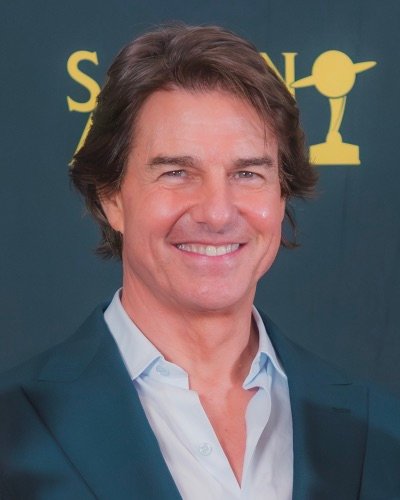 Tom Cruise
 Stephen King
Sources and Citations
Curated & Verified by: Karan Bhasin
Karan is a Lead Celebrity Intelligence Analyst with 8+ years of experience auditing public financial records, asset filings, and tracking brand endorsement deals. Checked for alignment with SEC filings and official press releases.